When You Reach the End of the Rope, Call. We Leave a Light On.
This page is for veterans, disabled parents, overwhelmed families, and seniors who have reached that breaking point where the stress is too heavy, the night is too long, and the next step feels hard to find. At Heaven-Sent, we want people to know they do not have to disappear into that dark place alone.
We believe some people do not need another speech. They need a voice, a number, a real person, and a place to turn when everything feels like it is caving in. If that is you, call. If that is your spouse, your parent, your son, your daughter, or a veteran you love, call.
The Time of Break Matters
There is a point where a parent, a veteran, or a senior stops feeling merely tired and starts feeling defeated. That moment matters. It is the point where a person can feel trapped, ashamed, afraid to ask for help, or so worn down they cannot see their own value anymore.
For parents of disabled children and adults with disabilities, that breaking point can come after months or years of carrying appointments, financial pressure, sleepless nights, fear for the future, behavioral stress, medical stress, and the daily weight of trying to keep everybody safe. For veterans, it can come after trying to hold the line in silence for too long. For seniors, it can come when loneliness, health issues, grief, or physical limits begin to crush hope.
That is why this page says it plainly: if you are at the end of your rope, call us no matter what. If you are a veteran in crisis, call 988 and press 1, and call us too. If you are not safe right now, call 911 first. Then reach back to Heaven-Sent and let us stand with you.
If This Is an Emergency, Move Now
If you are thinking about hurting yourself, hurting someone else, or you are in immediate danger, do not wait and do not sit with it alone. Use the emergency resources available right now.
If you are a veteran or a parent of a special-needs child of any age and you have truly reached the wall and no one else is there, please do not worry about the time.
Call (717) 623-0164 and ask for Joe.
We are like the light that stays on. We leave a light on for our veterans, our disabled parents, our seniors, and our families. If you are in that lonely hour, call.
We want this page to say one thing clearly: do not give up in silence. If you are scared, burned out, ashamed, angry, exhausted, or hanging on by a thread, call. Heaven-Sent wants to be the light that is still on when other doors feel closed.

Why Peer-to-Peer Matters
Heaven-Sent believes peer-to-peer groups work because people often open up more fully to those who have walked through similar burdens. Official PTSD resources and veteran peer-support research support the idea that peer support can reduce isolation, encourage help-seeking, and work as a strong complement to treatment, especially for veterans who are more willing to trust someone with shared lived experience. [web:406][web:405][web:375]
Peer support is not a replacement for evidence-based treatment when deeper clinical care is needed, but it can help keep people connected, validated, and engaged instead of shutting down and walking away from support altogether. That is why the strongest model is often peer support plus professional care, not one or the other by itself. [web:375][web:405]
How Peer-to-Peer Helps With PTSD
- Reduces isolation by surrounding veterans with people who understand the burden.
- Builds connection through shared experience and mutual respect.
- Normalizes symptoms so people feel less broken and less alone.
- Improves coping by sharing practical strategies that work in real life.
- Increases treatment engagement by helping people stay connected to care.
- Creates a safer door into healing for those who hesitate to talk to non-peers.
What Makes the Best Model
- Peer support gives understanding, hope, and practical encouragement.
- Professional care gives structure, assessment, and deeper trauma treatment.
- Mentors and senior staff can help new participants keep moving forward.
- Group, individual, and family counseling can work together instead of competing.
- For many people, healing starts when trust is rebuilt one conversation at a time.
Mentors, Newcomers, and Open Door Support
Many strong programs use mentors because people do better when they are not left to figure everything out alone. Heaven-Sent can use senior staff, mentors, or experienced peers to help newcomers, answer questions, support vocational or class-based goals, and help people keep moving toward stability instead of dropping out under pressure.
We believe in an open-door approach. People should be able to ask questions, voice concerns, and know they are not being treated like a number.
Family, Group, and Individual Counseling
Individual counseling, group counseling, and family support all matter. Families often carry the stress too, and healing becomes stronger when spouses, caregivers, and loved ones are not ignored. Heaven-Sent’s approach should point people toward practical help, emotional support, and the right level of care at the right time.
For substance use, trauma, exhaustion, grief, or family overload, the goal is not just survival for one more day. The goal is to help people regain stability, coping skills, and a path forward.
Heaven-Sent Contact Team
These are the people standing watch on this page. If you need help and do not know where to start, start with Joe.
Joe Ryan
Phone: (689) 204-1989 ext 101
Email: joepres@heaven-sent-veterans-outreach.org
Direct emergency support line: (717) 623-0164
Tim
Phone: (689) 262-6691 ext 102
Email: timdisasterrelief1@heaven-sent-veterans-outreach.org
For support coordination and outreach needs.
Darrell
Phone: (689) 262-6524 ext 103
Email: commandercorner@heaven-sent-veterans-outreach.org
For veteran-centered support and connection.
Teresa
Phone: (689) 262-6519 ext 104
Email: teresawdirectoroffaithpastor@heaven-sent-veterans-outreach.org
For prayer, pastoral support, and encouragement.
Emergency Contact Form
If calling is hard right now, use this emergency form to gather the critical information fast. This is front-end only for now, but it is laid out for the emergency details you asked for, including an emergency email click that can later be connected to all staff.
Emergency Email Click
Use this front-end emergency email link right now: Send Emergency Email to Heaven-Sent Team
For Families at the End of the Rope
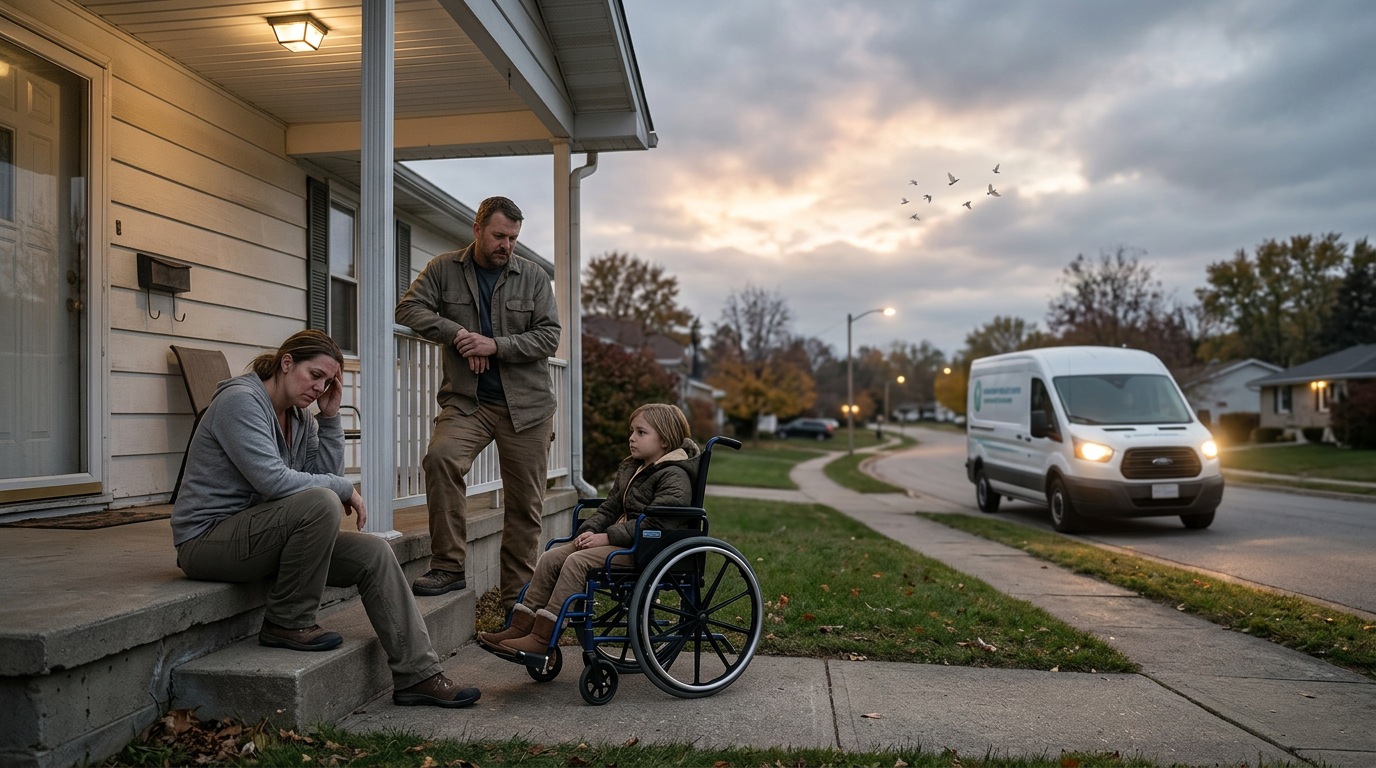
The bottom of this page is here for the families who are trying to keep it together while everything inside the home feels stretched too far. Sometimes mom is at the end of her rope. Sometimes dad is at the end of his rope. Sometimes both are running on fumes at the same time, trying to hold together a home, a child with serious needs, and a life that no longer feels manageable.
We want those families to know this: needing help does not mean failure. Reaching out does not mean weakness. It means the burden got heavy enough that support is now necessary. That is exactly when you should call.